Kansas City Public Schools
Advancing Toward a Trauma-Informed District by 2030
Friday, May 1, 2026

The Challenge
As part of their commitment to becoming a Trauma-Informed District by 2030, Kansas City Public Schools (KCPS), a long-time partner in Jackson County, partnered with the Community Health Commission of Missouri (CHCM) to implement the Missouri Model for Trauma-Informed Schools — a framework designed to guide districts from trauma awareness to full systems integration of trauma-informed care.
However, advancing through the model has requires more than intention. District leaders need to build internal capacity, deepen staff expertise, and align practices across departments to move from early-stage awareness to sustainable implementation.
Through this partnership, CHCM aligned training, learning collaboratives, and technical assistance directly with KCPS’s progress through the Missouri Model. Rather than standalone efforts, each component was designed to strengthen specific stages of implementation and support long-term systems change.
Our Approach
Becoming trauma-informed is not a one-time initiative. It is a structural shift.
CHCM’s partnership with KCPS focused on three core strategies:
1. Build Internal Capacity
KCPS clinical staff completed a 16-hour Train-the-Trainer: Trauma Awareness workshop, equipping them to deliver 90-minute introductory trainings district-wide.
This model reduces long-term reliance on external facilitators and ensures sustainability as new staff and stakeholders join the district.
Impact:
- 100% learned strategies to facilitate equity-centered trauma awareness trainings
- 85% felt confident with the training content immediately following the workshop
- 100% would recommend the training to a colleague
2. Strengthen Clinical & Equity-Centered Practice
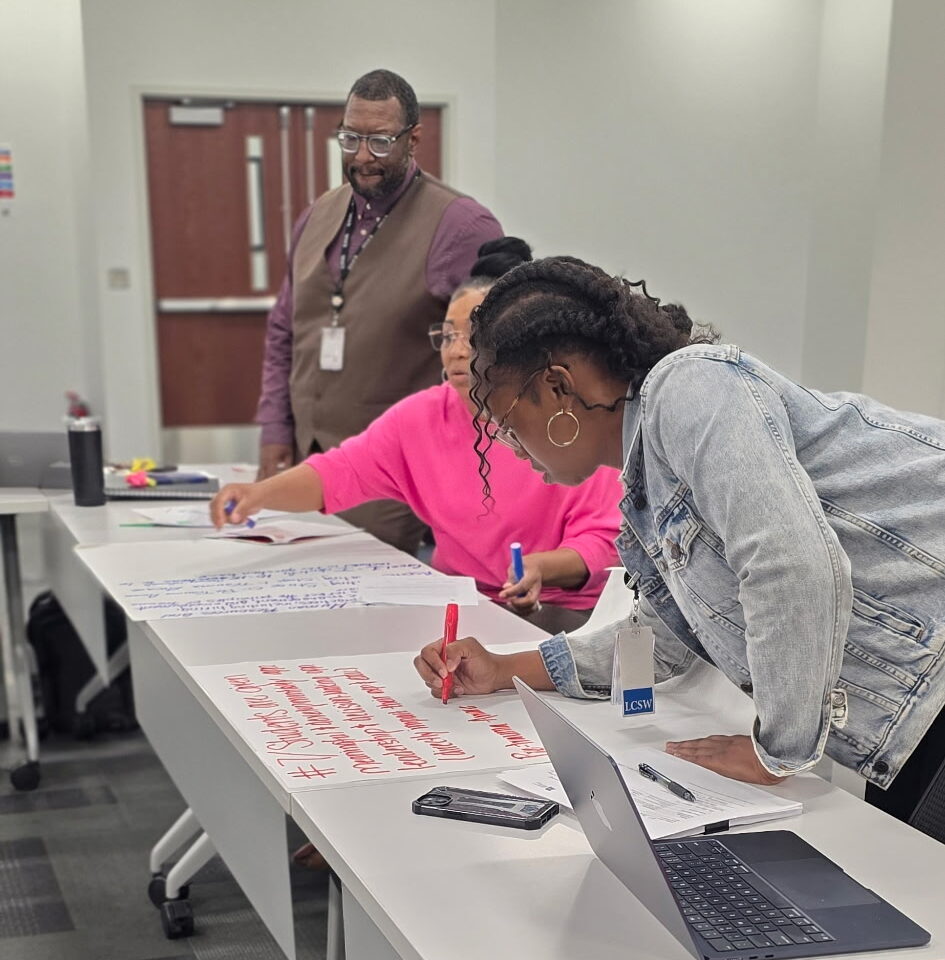
CHCM facilitated four Learning Collaboratives focused on:
- Suicide Prevention
- Structural and Cultural Competency
- Ethical Considerations
- Clinical Assessment
These sessions strengthened staff capacity to identify risk, address systemic inequities, and integrate trauma-informed principles into daily practice.
Results:
- 24 clinical staff participated
- Up to 234 Continuing Education Units (CEUs) provided
- 100% reported stronger understanding of structural competency
- 100% have a better understanding of the impact of anti-DEIAB restrictions on workforce development.
- 93% increased confidence applying ethical principles in practice
These collaboratives reinforced that trauma-informed work must address both individual experiences and the structural conditions that shape them.
3. Move from Awareness to Systems Change
The Missouri Model positions trauma-informed care as a shared, district-wide responsibility.
To deepen this work, KCPS established a cross-departmental CORE Implementation Team to align efforts across departments and functions.
Using the Missouri Model for Trauma-Informed Schools, the team identified four priority indicators:
- Student Voice & Leadership – Expanding meaningful student decision-making opportunities
- Staff Leadership & Innovation – Strengthening building-level leadership buy-in
- Curriculum Alignment – Embedding trauma-informed strategies into K–12 curriculum maps
- HR & Supervision Practices – Developing trauma-informed hiring rubrics and interview practices
This approach reinforces that trauma-informed care is not limited to student services, but embedded as a responsibility of the entire district.

Wins
The partnership produced measurable progress across the district:
- Cross-district understanding of what it means to be trauma-informed
- Increased knowledge of the Missouri Model framework
- Meaningful cross-department collaboration
- Sustainable internal training infrastructure
- CEU access supporting licensed social workers
“It has helped us bring some of our systemic inefficiencies to the surface and allowed us to have real conversations about things.”
“For students, it creates safe, empathetic spaces that address trauma from poverty or violence, boosting engagement and academic outcomes. For staff, it fosters a supportive culture, reducing burnout and equipping them to handle challenges with compassion and empathy.”
What’s Next
KCPS and CHCM will continue building momentum through:
- Ongoing Learning Collaboratives (up to 12 additional CEUs)
- Updated Equity-Centered Trauma Awareness training for leadership
- Continued CORE team action planning and policy integration
The Impact
KCPS is not simply offering professional development — it is building infrastructure for sustainable, equity-centered change.
Through internal capacity-building, leadership alignment, and structural reform, the district is advancing toward its 2030 goal of becoming fully trauma-informed.
A Practical Starting Point for Districts
We recognize that every district is in a different place.
For some, language like “trauma-informed” or “equity-centered” may feel new, complex, or difficult to navigate in the current environment. What this work with Kansas City Public Schools shows is that progress doesn’t require having all the language figured out on day one.
It starts with focusing on what’s in front of you.
If your district is working to:
- Reduce staff burnout and turnover
- Improve student engagement and behavior
- Strengthen school climate and safety
- Support educators in responding to real-world challenges
You are already doing trauma-informed work.
We can begin there.
Ready to Build a Trauma-Informed School System?
Whether you’re beginning your trauma-informed journey or working to embed equity-centered practice at the policy level, CHCM partners with education systems to create sustainable change.