
Roadmap to Equity: An Anniversary Experience

About the Event
Roadmap to Equity: An Anniversary Experience is our first annual community gathering that commemorates CHCM’s second anniversary and offers an opportunity to reflect on the progress made since the organization was established while looking ahead to the next chapter of community-driven impact across Missouri. Roadmap to Equity explores how communities across Missouri are advancing health, healing, and equity through art, storytelling, data, and dialogue. This year’s theme, Through Our Eyes—Art, Data & Community Visioning for a Thriving Community, brings together community members, partners, advocates, and leaders for an afternoon of connection, creativity, and collective visioning.
A central feature of this year’s event is CHCM’s Artist in Residence initiative, helped made possible in part by a 2025 Program Support Grant from the Regional Arts Commission of St. Louis (RAC), which recognizes art as a powerful tool for storytelling, healing, advancing justice, and social change. Through portraiture and realism, the installation examines how place, opportunity, and historic disinvestment shape health outcomes while challenging viewers to envision a more equitable future.
Meet our Artist in Residence
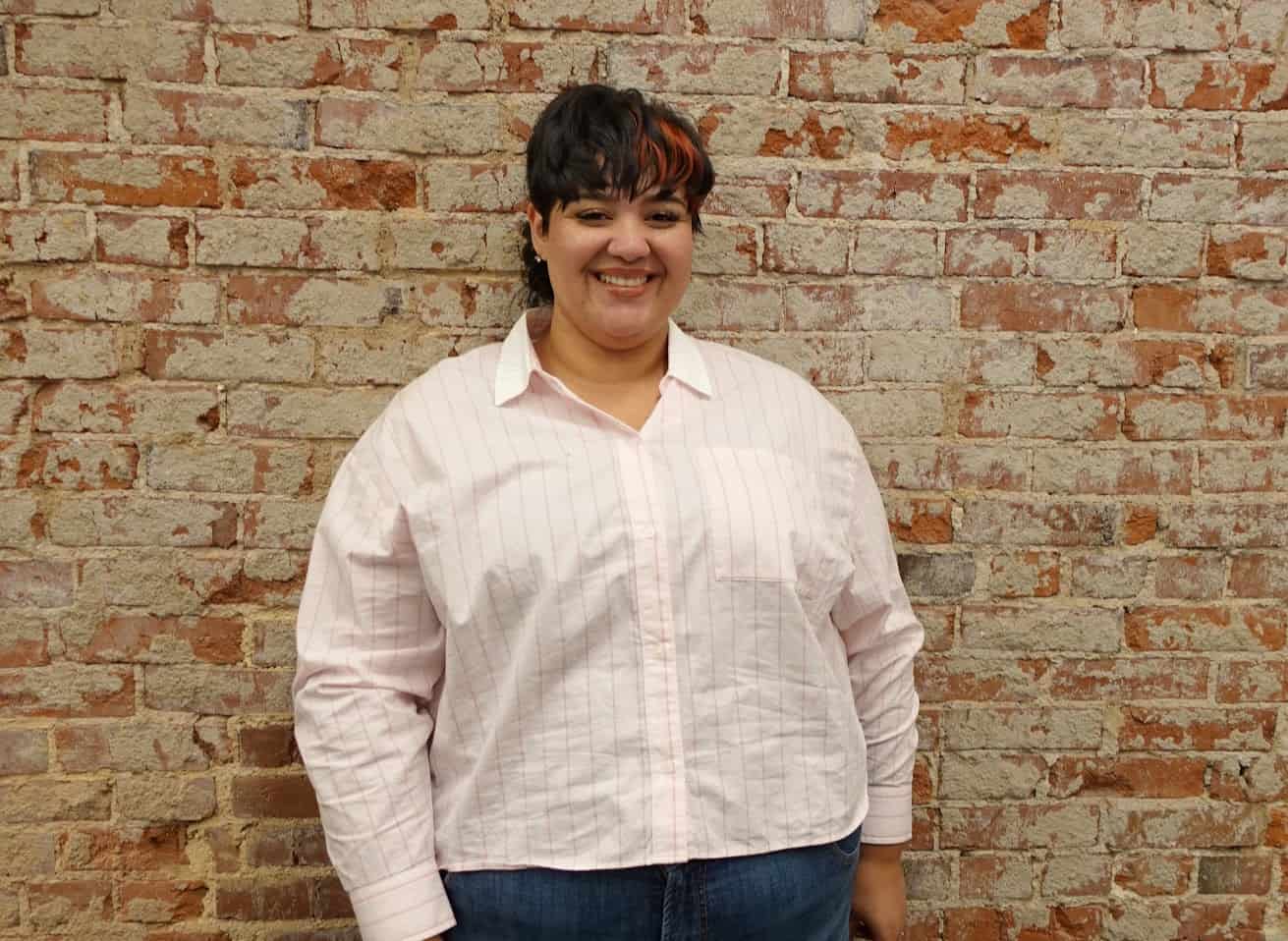
Janessa Williams, MA, BFA
Janessa Williams, also known as ColorTripz, is a St. Louis–based artist working across acrylic painting, digital illustration, and graphic design. She has served communities throughout St. Louis as a Teaching Artist with multiple nonprofits, leading mural projects, studio residencies, and community-based workshops for youth and adults. Janessa is passionate about helping creatives reconnect with and heal their inner artist, fostering spaces for self-expression and growth. Her work has been exhibited throughout the region and is recognized for its bold, vibrant use of color to celebrate the richness and beauty of melanated skin, while exploring themes of social justice, feminism, and Black culture. She holds a Master’s degree in Public Relations from Full Sail University and a Bachelor of Fine Arts in Graphic Design from Southeast Missouri State University.
Artist’s Statement
“St. Louis is Worth Saving” (quote from Precious Barry) is a series of paintings that examines the challenges, contradictions, and possibilities that define life in the St. Louis region. Through themes of educational inequity, environmental injustice, food insecurity, and community resilience, the work explores how historical decisions continue to shape present-day realities while asking viewers to imagine a more equitable future.
The series was inspired by a simple yet powerful question: How can two people living only a few miles apart experience vastly different outcomes in health, education, opportunity, and quality of life? Throughout St. Louis, communities facing school closures, environmental contamination, food deserts, and decades of disinvestment often exist alongside neighborhoods with abundant resources and opportunity. These disparities are not accidental. They are the result of policies, practices, and systems that have shaped where people live, learn, work, and thrive.
Works such as 125, All the Bells Not Rung, and A Weapon of Mass Destruction focus on the human impact behind the statistics. They honor the students affected by school closures, the families living with the consequences of Coldwater Creek contamination, and the residents navigating food insecurity across the region. While each painting addresses a specific issue, together they reveal a broader story about access, neglect, and the lasting effects of inequality.
Yet this series is not solely about hardship. At its heart is The Village, a reminder that St. Louis has always been sustained by the strength of its people. Despite the city’s challenges, communities continue to organize, create, advocate, rebuild, and care for one another. From neighborhood gardens and small businesses to grassroots activism and mutual aid, St. Louisans repeatedly demonstrate that our greatest resource is each other.
The title, “St. Louis is Worth Saving“, is both a statement and an invitation. It challenges narratives that reduce neighborhoods to their struggles and instead recognizes the people, histories, cultures, and possibilities that exist within them. This body of work is not intended to place blame or inspire guilt. Rather, it asks viewers to pause, reflect, and consider their role in shaping the future of our city.
St. Louis is a city with scars, but it is also a city of resilience, innovation, and hope. If we are willing to confront our history, invest in our communities, and listen to one another, we have the power to build a future where opportunity is not determined by a ZIP code. The stories told in this series serve as a reminder that every neighborhood matters, every voice matters, and that together, we are worth saving.


The Data
As part of her Artist-in-Residence program with CHCM, Janessa immersed herself in community perspectives to better understand how St. Louis residents experience health inequities and how they envision a healthier future. Through a series of community listening sessions, participants shared their experiences, challenges, hopes, and ideas for what a thriving St. Louis could look like.
Those conversations became the foundation for the artwork featured throughout this exhibit. Many of the community members’ own words are included below, offering a glimpse into the stories and perspectives that inspired Janessa’s work.
To complement these lived experiences, CHCM has curated data highlighting disparities across Missouri related to the four determinants of health explored in the exhibit, which can be found below.
Together, the artwork, community voices, and data invite viewers to reflect on both the realities communities face today and the possibilities for a healthier, more equitable future.
Food
“One of the biggest barriers for people staying healthy is that many can only afford unhealthy habits, such as cheap snacks and foods that create a false sense of fulfillment. This challenge affects people the most who are living in poverty.”
St. Louis
Households near or below the poverty line are almost half as likely to report having enough food and the kind of food they want to eat.
Click here to learn more
Kansas City
In 2016, Black non-Hispanic households were nearly 2 times more likely to be food insecure (22.5%) than the national average (12.3%).
Click here to learn more
Southeast Missouri
According to Southeast Missouri Food Bank’s 2024 Annual Report, “1 in 6 of our neighbors face hunger, according to the most recent Meal Gap report. 1 in 5 children and 1 in 8 seniors are food insecure.”
Click here to learn moreHousing
“There are few things more healthy than clean, maintained (landlords!), and stable housing. [It] provides a stress-free foundation to have the opportunity to be healthy.”
St. Louis
Following the May 2025 St. Louis tornado, the Missouri Department of Commerce and Insurance identified ZIP codes 63115, 63107, and 63113 as the city’s most heavily uninsured areas, estimating that approximately 67% of homeowners and 90% of renters in those ZIP codes were likely uninsured.
Click here to learn more
Kansas City
Black renters account for nearly 37% of the regions Extremely Low Income (ELI) market, while making up just over 23% of the total renter households in the Kansas City region.
Click here to learn more
Southeast Missouri
At any given point in time in 2022, 98 SEMO individuals were unhoused.
Click here to learn moreEducation
“I would give more money to our public schools. The students would be the first to benefit, then their families. We know it is working when students graduate and go on to college at higher rates.”
St. Louis
In the census tracts immediately north and south of Delmar Boulevard, bachelor’s degree attainment is 5% north of Delmar compared with 67% south of Delmar.
Click here to learn more
Kansas City
Kansas City Public Schools remain highly segregated. Only 10% of the students are white, and the black/white achievement gap persists. the average act score for black students is 14.4 compared to 22.8 for white students.
Click here to learn more
Southeast Missouri
Districts in the region spend over $2,000 less per student than the state average.
Click here to learn moreHealth
“A healthy St. Louis becomes possible when we shift our mindset toward shared accountability and recognize that the entire region benefits when the most marginalized communities have real opportunities to thrive. If Black children (our most vulnerable and greatest asset) in St. Louis can flourish, then our city will truly be healthy. Start there and the rest will work itself out.”
St. Louis
A child born in 63106 near the Jeff-Vander-Lou neighborhood can expect to live 18 fewer years than a child born in 63105 (Clayton), 15 fewer years than a child born in 63017 (Chesterfield), 14 fewer years than children born in 63122 (Kirkwood) and 63109 (St. Louis Hills), and 3 years fewer than a child born in 63133 (Pagedale/Wellston).
Click here to learn more
Kansas City
Kansas City has a difference in 31 years between the census tracts with the shortest and longest life expectancy. The highest life expectancy for a census tract is 93 years, near the Plaza. The lowest tract life expectancy is 62 years, capturing the block from 31st St south to Armor, and from Troost to Woodland Ave.
Click here to learn more
Southeast Missouri
Missouri Bootheel counties (Dunklin, Mississippi, New Madrid, and Pemiscot) are in the south-easternmost area of Missouri, USA. These counties experience some of the worst health outcomes, with all four counties falling in the lowest 5% of the overall health rankings across 115 Missouri counties.
Click here to learn more